AEI Community Completes Wilderness First Aid Training
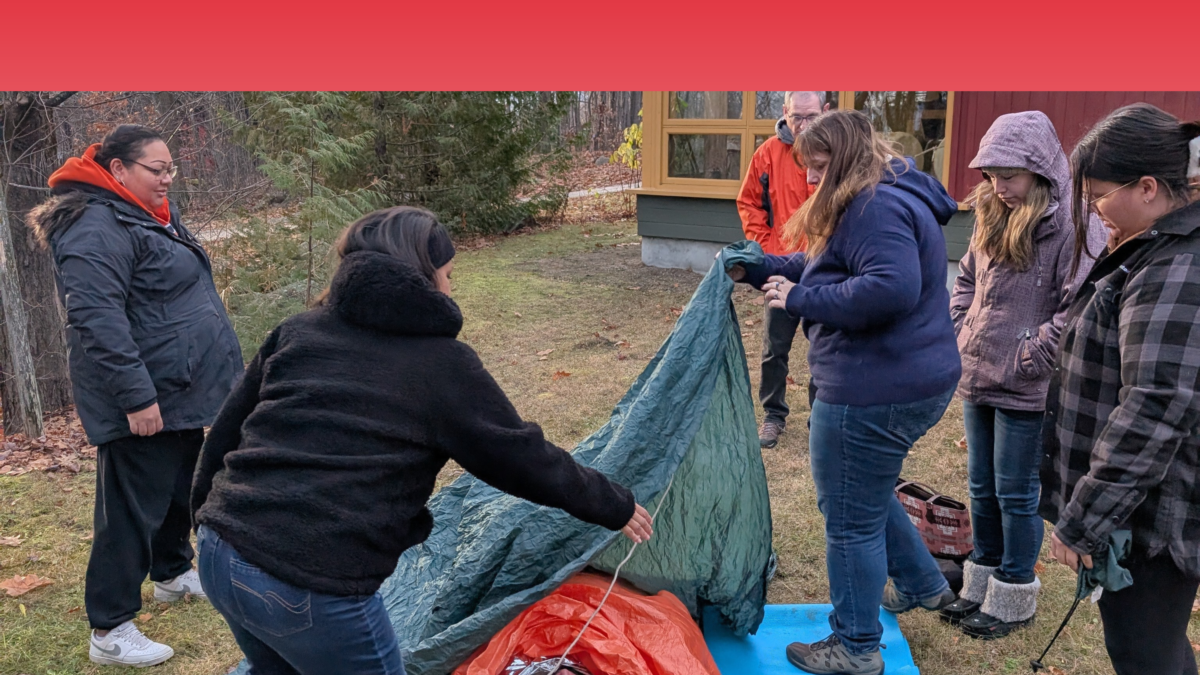
On November 12 & 13, 2026, Anishinabek Educational Institute (AEI) hosted a 20-hour Wilderness First Aid course for students, instructors, and staff. The training provided participants with practical knowledge and hands-on experience in responding to emergencies in remote environments where immediate medical assistance may not be available.
The course was led by Bryce Gartner, Deputy Chief of Nipissing Paramedic Services and owner of Shockwaves Paddle & First Aid. Combining classroom instruction with practical exercises and realistic emergency scenarios, the training challenged participants to assess situations, make decisions under pressure, and work together to provide care in isolated settings.
Throughout the two-day course, participants learned patient assessment techniques, CPR/AED skills, wound care, musculoskeletal injury management, patient movement and evacuation procedures, and the treatment of environmental emergencies such as heat-related illnesses, dehydration, and cold injuries. Training scenarios allowed participants to apply newly learned skills in realistic situations while working within their scope of practice until advanced medical care could be reached.
A key message throughout the course was the important role of the first responder at an emergency scene. As Gartner explained, “A first-aider is the first link in the chain of survival. It’s all meaningless if that chain is broken.” The scenarios that were practiced illustrated how important the care of a first-aider can be, particularly in environments where emergency services may be hours away.
The course emphasized more than medical skills alone. Participants explored decision-making, leadership, communication, prevention strategies, and emergency planning. These elements are especially relevant for individuals who spend time on the land, work in remote communities, or participate in outdoor educational activities.
For AEI, the training aligns closely with its commitment to community-based and land-based learning. Many programs incorporate experiential opportunities that take students beyond the traditional classroom setting. While these experiences offer meaningful ways to connect learning with community, culture, and the land, they also highlight the importance of being prepared to respond when emergencies occur.
Seven members of the AEI community completed the training, including three staff members, one instructor, and three students from the Social Service Indigenous Knowledge and Binoojiingyag Kinomaadwin (Early Childhood Education) programs. The course equipped participants with practical skills and knowledge that can make a critical difference when emergencies occur far from immediate medical assistance.